
Pleasant Prairie Court Lookup Routes
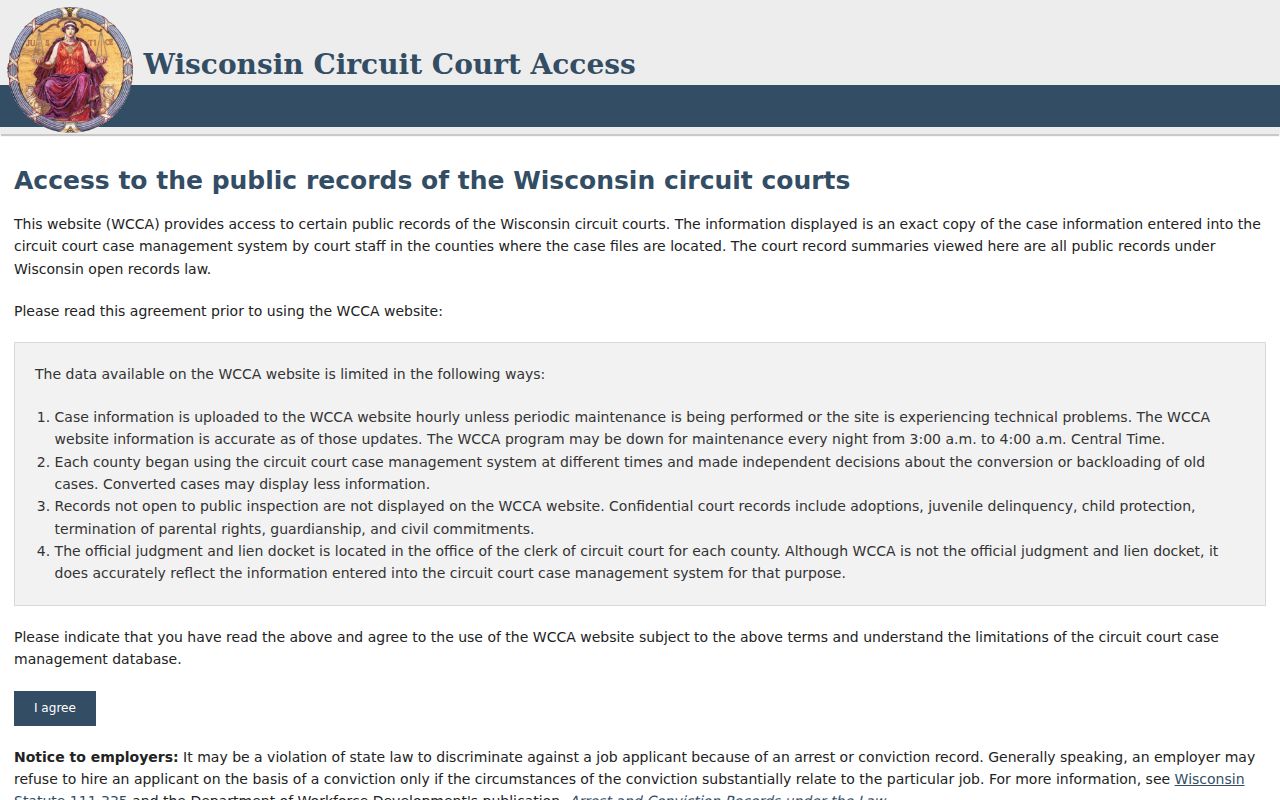
The statewide Wisconsin Circuit Court Access search is the name-search route for Kenosha County circuit cases.
For Village ordinance and citation matters, use the separate Pleasant Prairie Municipal Court page.
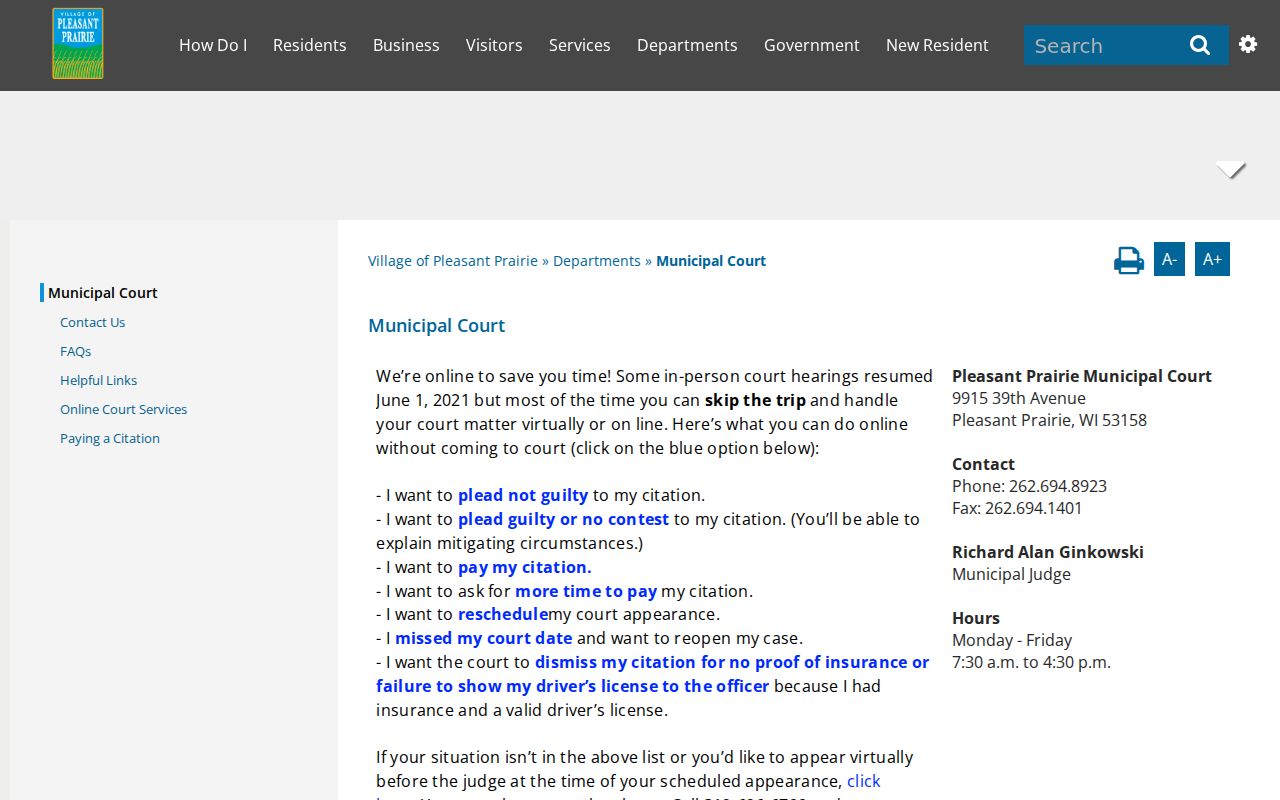
These two court channels are not interchangeable. WCCA covers circuit-court index data, while Village matters may require a citation action, phone call, visit, or public-record request to the municipal court custodian.
Neither screen makes a bare name conclusive. Confirm the court, case type, date, party role, and final activity before associating a record with a Pleasant Prairie resident.
Pleasant Prairie Voter Lookup Screen
The Wisconsin MyVote registration and address workflow shows the official entry point for name and address inputs.
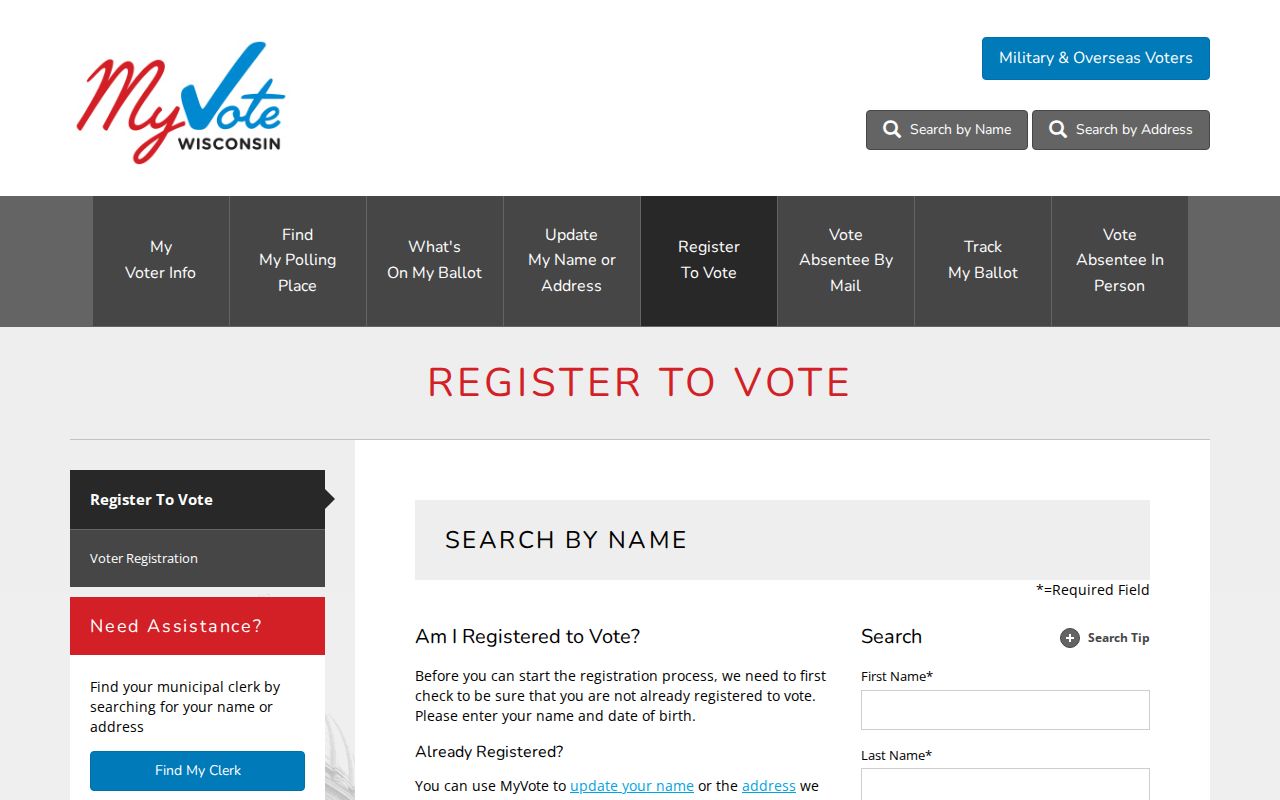
Use the fields only for an eligible voter inquiry, keep a birth date private, and respect protected-elector rules. A failed or empty result cannot disprove Pleasant Prairie residence.
Pleasant Prairie Lookup Record Coverage
An official Pleasant Prairie resident lookup is a set of narrow checks. Pick the record from the question, not from how much personal detail it might reveal. A parcel hit can tie an owner to land but not prove occupancy. MyVote can confirm an eligible person's voter profile under its rules, while WCCA can identify a case but not supply every filed document. Vital records concern a named family event and have eligibility limits.
| Record | What it may confirm | Official keeper | Access path |
|---|---|---|---|
| Property roll | Owner, parcel, situs and mailing fields | Village Assessment Services and Kenosha County | Catalis LandNav, GIS, office, or records request |
| Voter profile | Registration information for an eligible individual search | Wisconsin Elections Commission | MyVote, clerk, or WEC process |
| Circuit court index | Case metadata, parties, events, and status | Wisconsin Court System and court clerk | WCCA, courthouse terminal, or clerk file request |
| Vital event | Birth, death, marriage, or divorce event | Kenosha Register of Deeds and Wisconsin DHS | Application, ID, eligibility, and fee |
| Entity or credential | Registered entity role or public credential | Wisconsin DFI or DSPS | Public search and formal verification routes |
If the search begins with an address, move to the Pleasant Prairie street directory for the full parcel and deed chain. If it begins with one name, keep the work person-specific and write down the date, portal, spelling, and limits of each hit.
Check Pleasant Prairie Names in WCCA
Wisconsin Circuit Court Access, or WCCA, is the statewide circuit case index. For a Pleasant Prairie name, select Kenosha County when that fact is known. The party search accepts a last name of at least three characters, plus optional first and middle names, birth date, county, and other controls. A wildcard can broaden a partial surname. Search maiden names, married names, initials, suffixes, and common spelling variants separately.
| Search control | Use | Limit |
|---|---|---|
| Last name | Required for party-name search; wildcard can broaden it | At least three characters |
| First and middle name | Narrows common surnames and tests variants | Middle name is optional |
| Birth date | Helps separate similar names | Display and use vary with privacy rules |
| County | Narrows a statewide result to Kenosha | A person may have cases elsewhere |
| Case number | Finds one known case directly | Must be exact |
A result can show case number, filing date, county, case type and status, class code, branch, party type, event activity, charges or citations, judgments, and financial entries. It may show an address-last-updated field or limited birth data, depending on the matter. WCCA does not display every pleading, exhibit, police attachment, image, or transcript. Ask the Kenosha Clerk of Circuit Court for the underlying public file.
Note: A charge is not a disposition, a filed case is not a finding, and a “closed” status does not explain the outcome by itself.
Confirm Pleasant Prairie Name Matches
The same-name trap is serious in statewide records and older rural sources. Never merge a parcel owner, voter, court party, obituary subject, and license holder because the names look alike. Seek at least two matching clues, such as Kenosha County plus a date, a known address plus a spouse, or a legal description plus a deed party. Note conflicts instead of choosing the result that seems convenient.
| Case number | The unique court file reference, not a personal identity number. |
|---|---|
| Party role | How the person or entity appears in that particular case. |
| Filing and activity dates | The dated court events that establish chronology. |
| Case type and status | The category and current docket state, which require context. |
| Disposition or judgment | The recorded outcome where one exists, not an inference from the filing. |
For mistaken identity or address-display issues, the Wisconsin courts identify forms GF-182 and GF-183 where applicable. The court decides whether removal criteria are met. A Wisconsin DOJ criminal-history mismatch has a different challenge route, form DJ-LE-247, and can result in a Wisconsin Unique Personal Identification Number after a successful correction.
Pleasant Prairie Voter Lookup Fields
Wisconsin MyVote supports an individual voter profile search. Its name workflow uses first name, last name, and birth date. The address workflow uses street address, unit, city, and ZIP. It can return registration information and voting activity to the eligible searcher, but never ballot choices. It is not a streetwide directory and should not be turned into one.
When online access fails, contact the Village Clerk or Kenosha County Clerk, or follow Wisconsin Elections Commission procedures. Bulk voter data uses the separate Badger Voters request system, with account, estimate, payment, and download controls. Protected fields are withheld. The research notes a $25 base charge plus applicable record fees, but the current estimate should control any request.
MyVote and the property roll answer different questions. Registration at an address is not title ownership. A mailing recipient is not necessarily an occupant. A later move can also make a once-correct record stale. Keep the record date beside every resident lookup result.
Pleasant Prairie Vital Event Checks
Vital records verify events, not general residence. The Kenosha County Register of Deeds and Wisconsin DHS Vital Records handle eligible certificates. Wisconsin's state series starts October 1, 1907. Kenosha's local table lists marriages from 1850 and births and deaths from 1876, so church, county, library, and historical collections can matter before statewide registration.
Certified copies require direct and tangible interest under Wis. Stat. §§69.20-69.21, plus the application and acceptable identification. The listed fee is $20 for the first copy and $3 for each added copy of the same record in one order. County routes include mail and visits to the Register of Deeds in Kenosha or the County Center in Bristol. Wisconsin DHS also accepts mail and offers an online or phone vendor route with an added processing fee.
The DHS record page shows the current choices and access rules:
A death request may offer Fact of Death or Extended content. Recent cause, manner, and final disposition details have added limits. A divorce certificate is also not the same record as the court decree, which comes from the circuit court clerk.
Verify Pleasant Prairie Resident Records
Verification should move from the least intrusive exact fact to independent records. Search variants, but do not publish birth dates, protected addresses, or other sensitive fields used only to disambiguate a match. If the record matters for an estate, family history, scam check, or other lawful personal purpose, obtain the custodian's copy rather than relying on a search-result snippet.
- Write the person's full known name, name variants, Pleasant Prairie connection, and the date of the known fact.
- Anchor the name to one appropriate record, such as a parcel, voter profile, entity filing, or dated historical source.
- Search WCCA by name and Kenosha County, then compare party role, date, case type, and disposition rather than just the name.
- Use a vital record only for a specific family event and only through the applicable eligibility path.
- Ask the custodian for the underlying public record or a correction when the index is incomplete or wrong.
- Docket
- The dated list of filings and events in a court case.
- Index versus image
- An index points to a record; an image reproduces the underlying document and may require separate access.
- Certified copy
- A custodian-issued copy formally attested as a true copy under that office's rules.
The name, county, date, party role, and source should remain attached to each observation. That audit trail prevents a later researcher from treating a tentative match as confirmed.
Pleasant Prairie Resident Search Paths
A search for an heir often starts with a decedent's probate case in WCCA, then moves to the circuit court file, obituary, death record, and deed transfer. A fiduciary or heir named in probate can be a historical or legal mailing contact, not a current resident. For a former classmate, use the KCLS yearbook sets, Kenosha History Center school holdings, library newspapers, and UW-Parkside archives. A yearbook confirms a school and year only to the extent printed.
For an entity connection, the Wisconsin DFI Corporate Records Search may show legal name, entity type, registered agent and office, entity ID, filing history, principal-office information where required, status, and annual-report indicators. It does not record domestic LLC member names, telephone numbers, sole proprietors, DBAs, or every owner. Annual reports and charter copies are ordered separately.
A professional credential is checked through Wisconsin DSPS lookup routes by name or credential number. Credential status and board information can confirm an affiliation. They do not prove current Pleasant Prairie residence. Formal verification has a separate route and is listed as taking seven to ten business days.
Request Pleasant Prairie Resident Records
Wisconsin Public Records Law, Wis. Stat. §§19.31-19.39, allows any person to request existing government records subject to exceptions and the balancing test. It does not require an agency to create a new resident list. There is no fixed statewide response deadline; the custodian must respond within a reasonable time. Fees may cover copies, transcription, mailing, and qualifying location costs, but not a separate redaction charge.
For a Village record, use the Pleasant Prairie public-record request procedure. The Clerk routes general requests, while department heads keep their own files. Requests may be made by phone, mail, email, or in person. Ask for an existing permit, municipal court, meeting, police, or license file with an exact name, address, date range, and record type. The current Village page states a ten-working-day response expectation, while state law retains the reasonable-time standard.
Court documents go to the court clerk. Recorded deeds go to the Register of Deeds. Vital certificates follow the separate application process. A precise custodian request is more useful than asking an office to assemble “everyone who lives at” an address.
Note: Search portals are indexes with limits; an office counter, courthouse terminal, mail request, phone call, or archive visit may supply the missing record.
Pleasant Prairie Lookup Privacy Limits
A negative Pleasant Prairie resident lookup is not proof that someone is absent. Wisconsin DOJ's Safe at Home program, under Wis. Stat. §165.68, gives eligible people a substitute legal address. Agencies and election officials protect the actual location under the program's rules. Sealed, juvenile, expunged, restricted vital, victim, witness, and redacted records also remain outside an ordinary public search.
Safe at Home is especially important when comparing sources. An assigned address can appear in voter, court, or agency records while the actual Pleasant Prairie address stays protected. Respect that boundary. Do not try to reconstruct a protected location from property, map, family, or social details.
Lawful use. Use resident records only for lawful personal research. Wisconsin law does not permit stalking, harassment, threats, intimidation, fraud, or publication of protected personal details.
Errors belong with the custodian. Ask the assessor to review a parcel name, the Register of Deeds to review an indexing issue, the court to apply its correction procedure, or the Wisconsin DOJ to review a CIB mismatch. Preserve the old and corrected record dates. That is safer than silently rewriting the result.