
Pleasant Prairie Directory Archive Access
The Kenosha History Center archive is a strong in-person stop when a directory entry needs context from several formats.
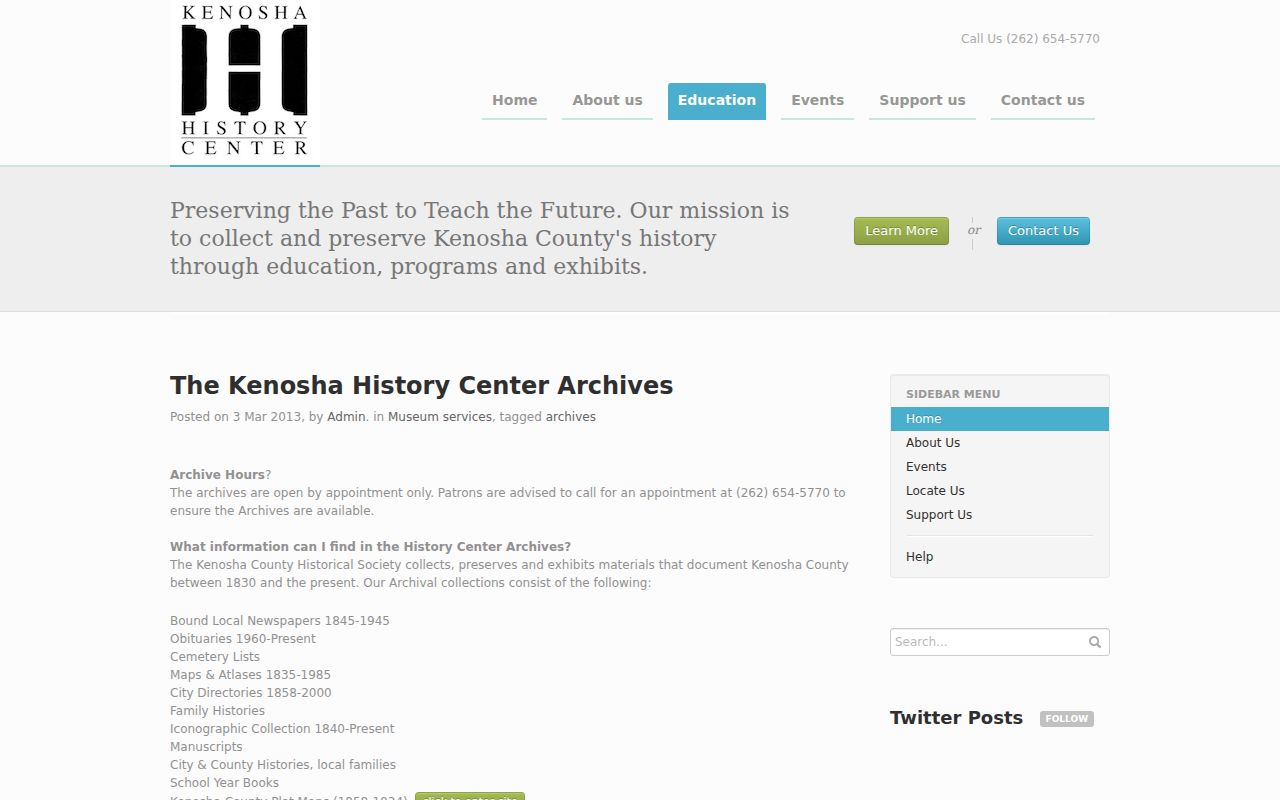
Contact the History Center before a visit and describe the surname, address, and date range. An appointment can bring a printed Pleasant Prairie directory entry beside an obituary or map that explains an address change.
Pleasant Prairie Directory Collections
The longest documented local run belongs to the Kenosha city and county directory shelf. It starts in 1858, then includes selected volumes through the early twentieth century, odd years through 1947, selected 1950s books, and near-annual runs from 1958 through 2007. Coverage is not uniform. A Kenosha title may include parts of Pleasant Prairie, rural residents, firms, or institutions, but it should not be treated as a complete Village list.
| Collection | Years represented | Where held | Access |
|---|---|---|---|
| Kenosha city and county directories | 1858; selected 1875-1956; annual 1958-1993 and 1995-2007 except 2004 | UW-Parkside Archives | Archive request or visit |
| Directories and phone books | 1858-2000 directories; 1911-2006 phone books | Kenosha History Center | Appointment and staff research |
| Farmer directories | 1897-98, 1919, 1934, 1947 | UW-Parkside Archives | Archive access |
| Digital local collections | Collection-specific | KCLS Digital Archive | Free online browsing |
| Census and local-history databases | Database-specific | Kenosha Public Library | Library or card access |
Confirm holdings before traveling. The UW-Parkside directory inventory supplies the detailed year list. The Kenosha History Center archives combine directories with maps, newspapers, cemetery lists, family files, and photographs. Those companion records often resolve a missing year or an omitted household.
Pleasant Prairie Directory Years
The documented sequence is unusually rich but irregular at first: 1858; a partial 1875 volume; 1903, 1904, 1904-05, 1906, 1908, 1910, 1912, 1914, 1916, 1918, 1919, 1920, and 1921. The list then has every odd year through 1947. It names 1950, 1952, 1954, 1955, and 1956, followed by every year from 1958 through 1993 and every year from 1995 through 2007 except 2004.
This city directory spine does not mean every Pleasant Prairie resident appears in every listed year. Earlier books can favor the City of Kenosha, firms, and residents served by certain post offices. Private people could be omitted. Rural entries may use a township, farm, post office, or Public Land Survey System section rather than today's municipal label. Record the title page and coverage statement with each entry so that a Kenosha listing is not silently converted into a Village address.
Note: A missing name can reflect incomplete coverage, a move, a spelling change, or a choice not to list, rather than absence from Pleasant Prairie.
Pleasant Prairie Directory Research Desks
The local search has several access channels. Kenosha Public Library, at 7979 38th Avenue in Kenosha, provides genealogy and local-history resources by phone at 262-564-6100 and through its research page. Ancestry Library Edition is available in the library with a card. HeritageQuest supports remote and in-library research. Newspaper Archive is an in-library source with Kenosha coverage from May 1, 1945 through January 31, 1994, plus a few months from 2012 and 2013.
Kenosha Public Library
Genealogy databases, local histories, newspapers, directory material, and staff help.
UW-Parkside Archives
Directory year lists, farmer books, maps, plats, and archive requests.
Kenosha History Center
Directories, phone books, obituaries, newspapers, cemetery material, and manuscripts.
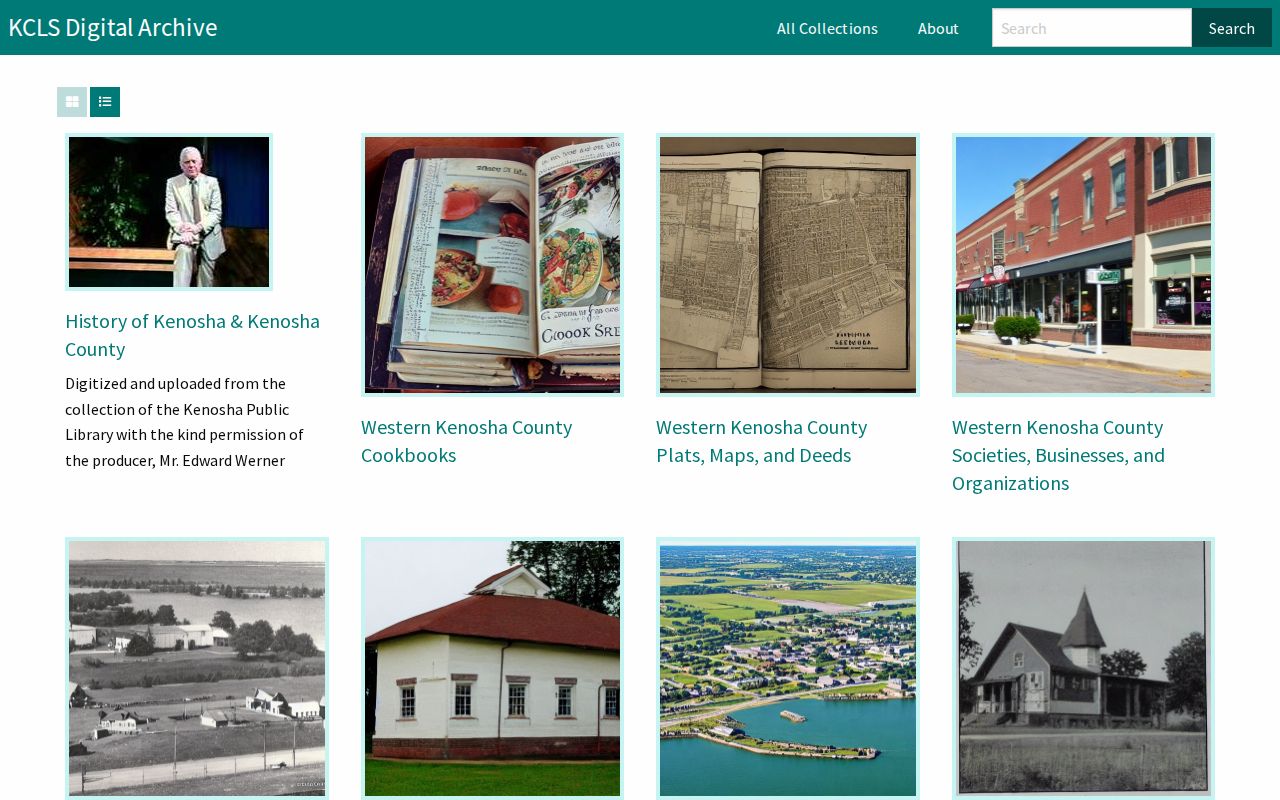
For online work, the KCLS Digital Archive organizes material under towns and villages, schools, societies, maps and deeds, and family history. Search a surname with a school, farm, organization, or community name. That is often more useful than searching only for Pleasant Prairie.
The KCLS collection interface shows how regional material is grouped:
Read Pleasant Prairie Directory Entries
A directory entry is a dated observation, not a permanent profile. Transcribe the text exactly and photograph the page key. A name may be followed by a spouse, trade, business, workplace, street address, rural route, or ownership mark. Abbreviations vary by publisher and year. An “r” may introduce a residence, while other short forms can describe boarding, a widow, or a business site, but only that volume's key settles the meaning.
| Name | Printed person or householder name, including initials and spelling. |
|---|---|
| Spouse or widow notation | A relationship clue to check in vital, census, or obituary evidence. |
| Address or route | The printed house number, street, rural route, post office, or farm location. |
| Trade or affiliation | A dated detail useful for separating same-name people. |
| Symbols and abbreviations | Publisher-specific marks decoded by the book's own key. |
- Criss-cross directory
- A section arranged by street and house number instead of surname.
- Householder index
- A name or address list focused on the person associated with a household.
- Abbreviation key
- The legend that explains shortened terms and ownership or residence marks.
A city directory should not be used alone to claim ownership. Match the entry to a plat or deed when land title matters. For modern parcel work, use the Pleasant Prairie street directory workflow instead of forcing a historic notation into today's map.
Pleasant Prairie Farmer Directories
Rural Pleasant Prairie households can hide outside the usual alphabetical street list. UW-Parkside identifies a Smith's Racine and Kenosha counties business and farmers' directory for 1897-98, a Prairie Farmer directory for 1919, a 1934 farmers' directory, and a 1947 farm directory. These books may organize a resident by township, Public Land Survey System section, post office, acreage, spouse, or farm details.
PLSS means the Public Land Survey System, the township, range, and section grid used in legal land descriptions. When an old entry lacks a modern street number, note its section and post office. Compare those details with UW-Parkside's digitized local plats, which span 1858 through 1934 and can show owner names, acreage, houses, and land features. Then bridge the tract to a current parcel with its legal description.
This is crucial around Pleasant Prairie. The legal municipality is a village, and older sources may call the same area a town, settlement, farm district, or Kenosha post-office territory. Modern labels should not be projected backward without map evidence.
Pleasant Prairie Address Bridges
UW-Parkside holds a 1927 “New Street Numbering Section.” It is a valuable clue to changed Kenosha city numbers, but it is not a proven Pleasant Prairie-wide conversion table. Rural Village addresses require a second bridge. Test the old route or number against a plat, deed legal description, road history, and current parcel rather than assuming that the 1927 rule crossed the city line.
| Date | Directory and records milestone |
|---|---|
| 1858 | Earliest listed Kenosha directory and first year in the regional plat span. |
| 1876 | Kenosha County's earliest listed local birth and death registration year. |
| 1897-98 | First listed farmers' directory. |
| 1927 | Kenosha numbering section offers a limited address bridge. |
| 1958-1993 | Annual city directory coverage is listed. |
| 1995-2007 | Annual coverage continues except for 2004. |
The sequence explains why one Pleasant Prairie household can appear under a farm section, then a route, and later a numbered street. It also explains why exact-text search may fail even when the family stayed on the same land.
Pleasant Prairie Resident Companions
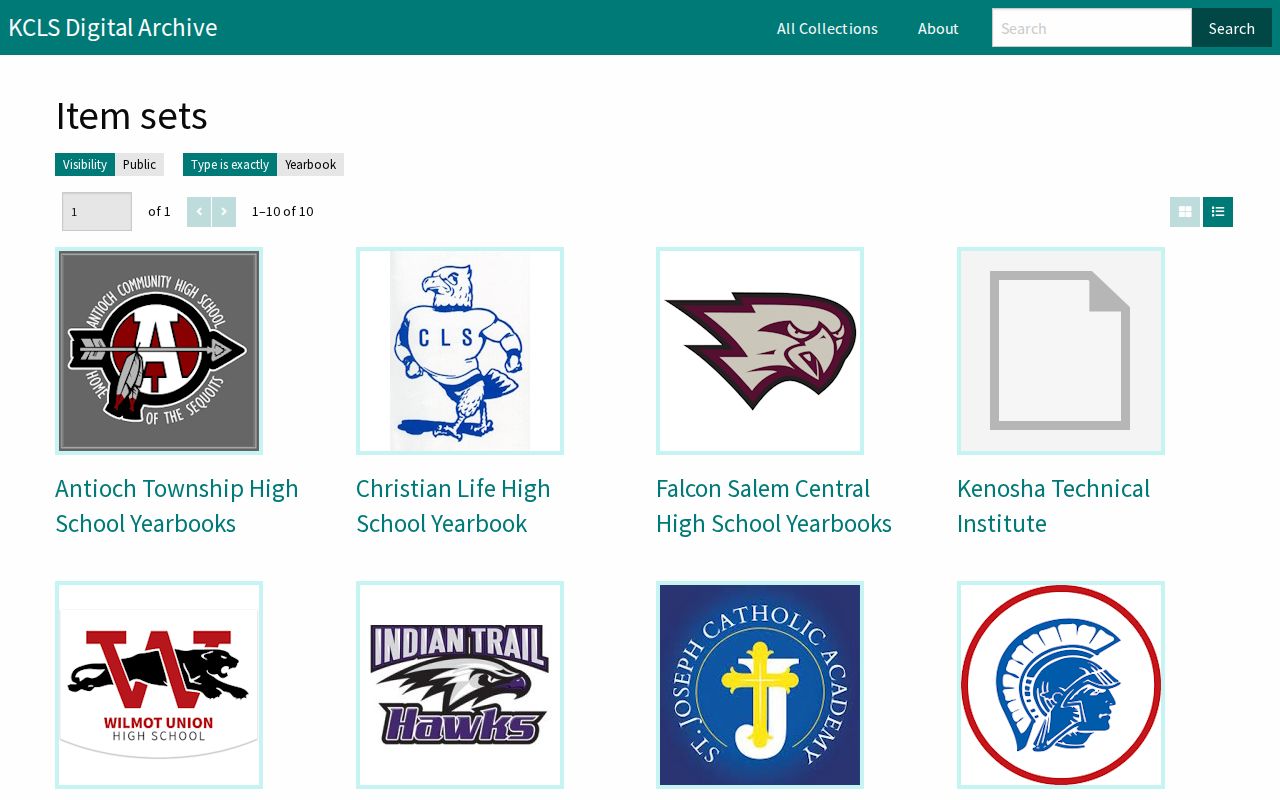
Directories are stronger when paired with records made for another purpose. The KCLS yearbook sets cover several Kenosha County and nearby schools, though they are not a complete Pleasant Prairie school archive. Yearbooks can confirm a school and year. Newspapers can add an obituary, anniversary, civic role, or address. The History Center's bound papers cover 1845 through 1945, its obituary holdings run from 1960 to the present, and the library database begins in 1945 with documented gaps.
Browse the KCLS yearbook results before assuming a school volume survives online.
A person missing from a city directory may have moved, died, changed a surname, lived outside its scope, or chosen not to list. Newspaper and yearbook dates can narrow those choices without making any one source final.
Trace Pleasant Prairie Directory Households
Family history needs a sequence, not one hit. Start with the strongest known year and copy the entry exactly. Follow the person forward and backward through available city directories. Each change in address, spouse notation, name form, or work becomes a test point for another source. Census records are released after 72 years, so use a census as a dated household snapshot rather than proof that all people stayed through the decade.
- Find the first reliable entry and save the title, year, page, spelling, and abbreviation key.
- Check the prior and next available years, noting every move and gap.
- Use a reverse street list where available to compare the address and nearby households.
- Pair directory observations with census, plat, deed, and vital evidence from the same period.
- Close a disappearing trail with newspaper, obituary, cemetery, probate, or later address records.
A family event before statewide vital registration may still have local evidence. Kenosha County's table begins marriage registration in 1850 and birth and death registration in 1876, while Wisconsin's state system begins October 1, 1907. Earlier church, county, and historical collections matter. If a directory lead reaches a living person, switch to the official, limited methods in the Pleasant Prairie resident lookup.
Note: Preserve uncertainty for shared names; spouse, date, address, farm section, and deed details should supply at least two matching clues.